

Schalfkogel
Map & elevation profile
The Tour
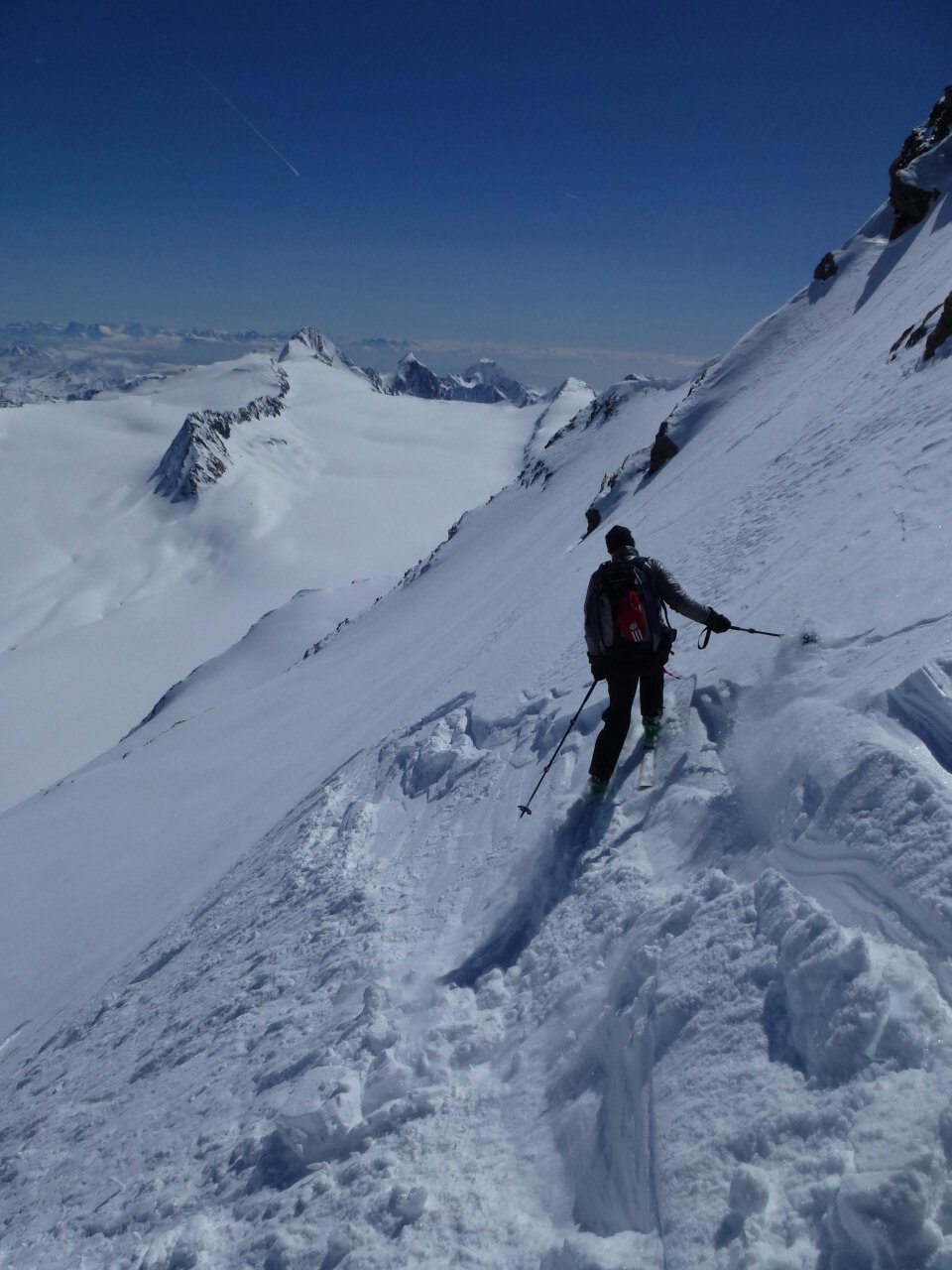
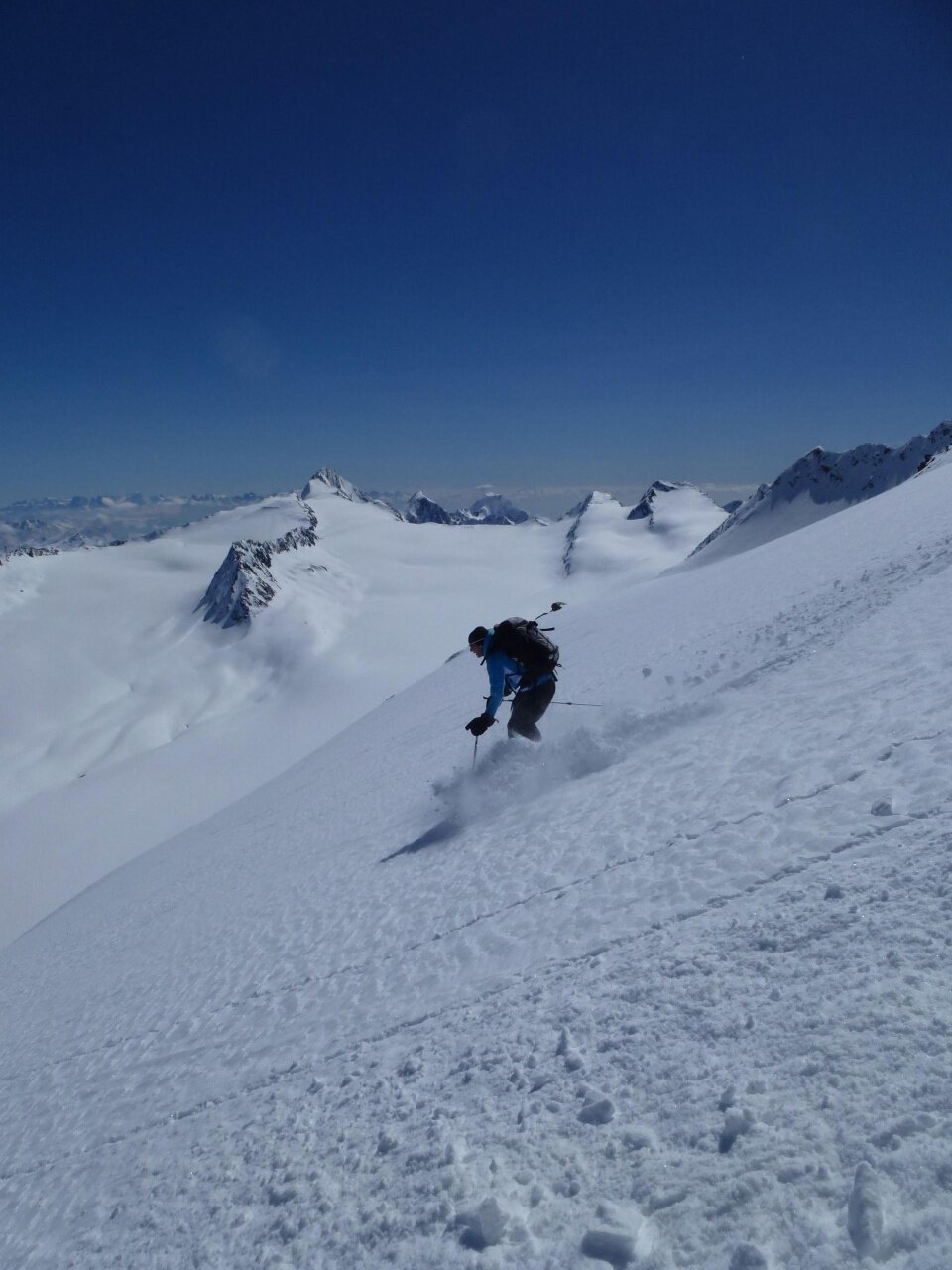
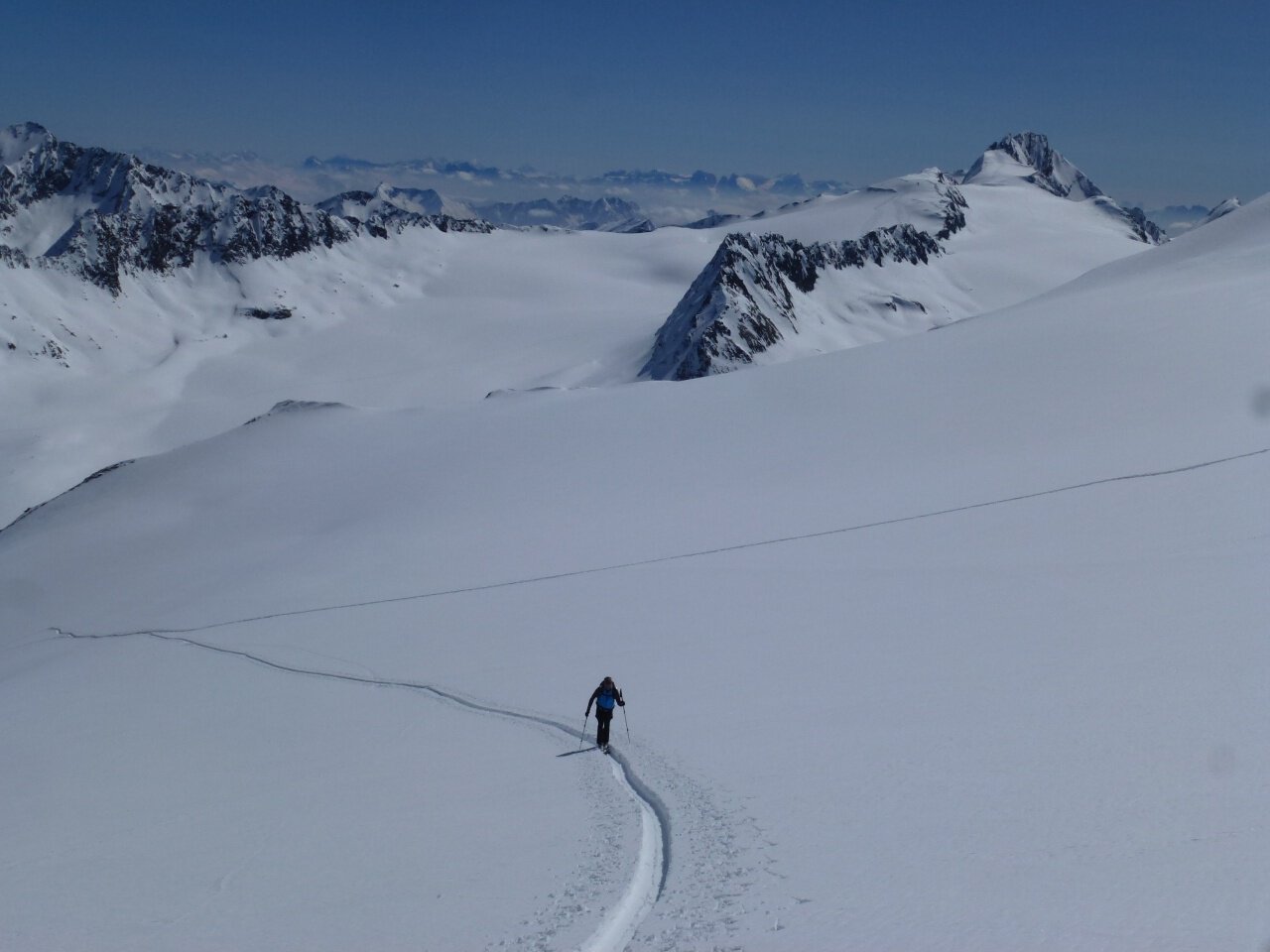
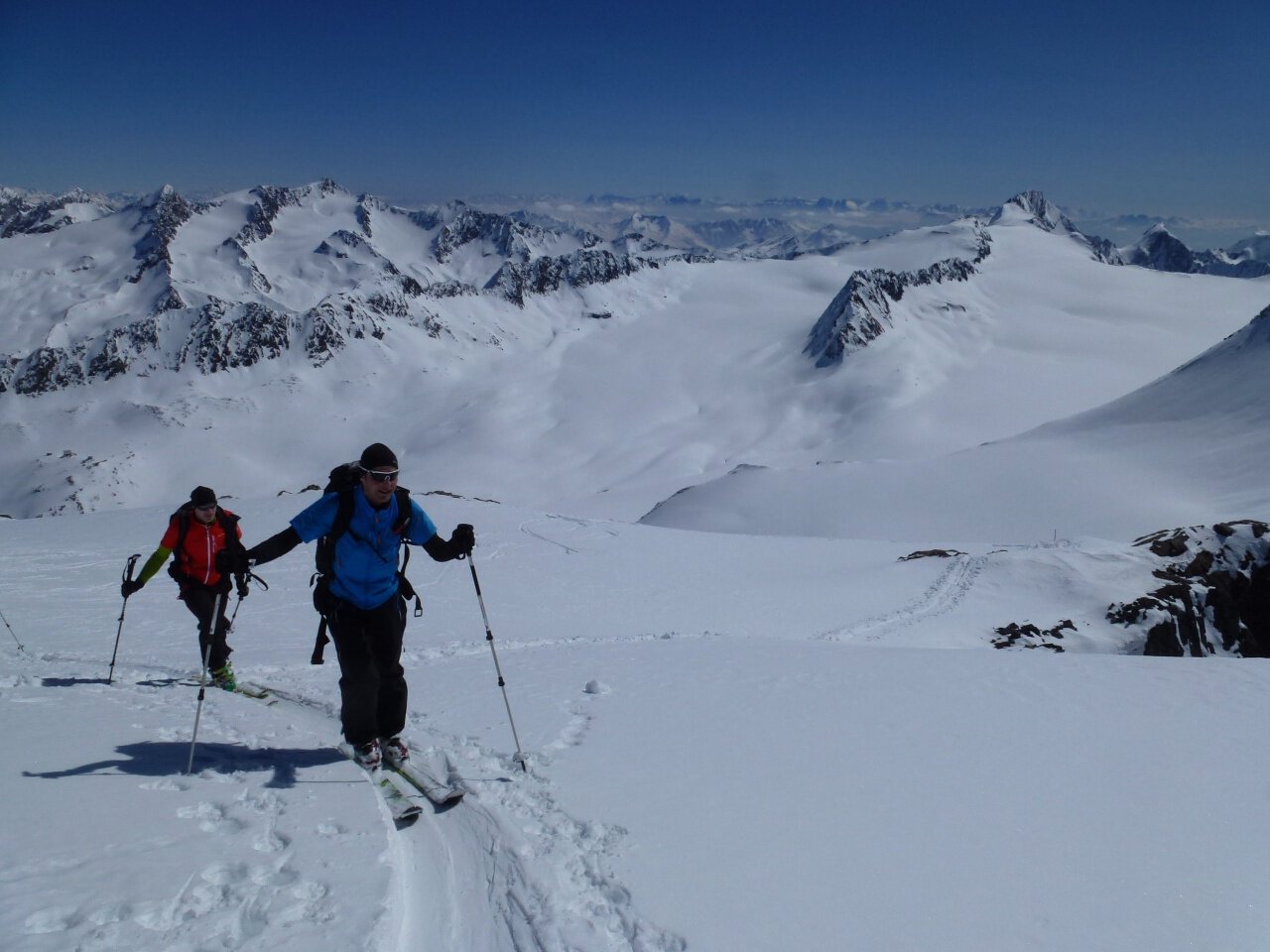
The ski tour to Schalfkogel 3537 m from Langtalereck hut 2430 m is a serious, high-alpine mountain ascent. The highlight is the 900 vertical meters descent over the Schalfferner. Full concentration is required from start to finish. For this, optimal snow and avalanche conditions as well as, of course, the best possible weather conditions must prevail at all times.
Ascent: 3 h 15 min.
Descent: 1 h 15 min.
Regions & Places
Mountain areas
Details
Characteristics
Way types
Safety guidelines
Avalanche danger scale
1 (LOW)
An avalanche release is only possible under heavy additional load on very few, extreme steep slopes. Spontaneous avalanches (so-called slides) are not expected. Generally safe conditions.
2 (MODERATE)
An avalanche release is likely under heavy additional load mainly on the indicated steep slopes. Larger avalanches are not expected. The snow cover is generally well consolidated, except at some steep slopes. Careful route choice at the specified steep slopes and slope exposures.
3 (CONSIDERABLE)
An avalanche release is already likely under slight additional load mainly on the indicated steep slopes. Occasionally some medium, occasionally large avalanches are possible spontaneously. The snow cover is only moderately to weakly consolidated on many steep slopes. Experience in avalanche assessment is necessary. Avoid the indicated steep slopes and slope exposures as much as possible.
4 (HIGH)
An avalanche release is already possible under slight additional load mainly on the indicated steep slopes. Occasionally many medium and repeatedly large avalanches occur. On many steep slopes, the snow cover is only weakly consolidated. Limit route choice to moderately steep terrain and observe avalanche run-out zones. Extensive experience in avalanche assessment is necessary.
5 (VERY HIGH)
Numerous large avalanches are expected spontaneously, also in moderately steep terrain. At this warning level, safe operation in ski areas is no longer possible. The snow cover is generally weakly consolidated and unstable. Avoid tours is recommended.
See also at lawine.tirol.gv.at
Additional information
Ski touring rules
- Observe all regulations during activities in nature and in selecting routes (e.g., wildlife protection areas, hunting restricted zones, reforestation areas, information boards, etc.)
- Respect quiet zones for wildlife and avoid feeding areas and loud noise
- Traverse forest areas in winter preferably only on designated paths and routes, as animals react very panicked to unlocalized noise.
- Recognize the habitats of wild animals and avoid them as much as possible. Observe wildlife only from a distance. Keep dogs on a leash at all times; it is absolutely irresponsible to let dogs run free in the forest during winter distress periods.
- Proper time planning: Start early enough and return before darkness. In spring, you should be back at the hut by midday (avalanche danger).
- Never drive through reforestations and young growth areas.
Ötztal Tourism takes no liability for the listed tours and recommends taking a mountain guide. Glacier crossings are only possible with a rope and in a group.
Before starting a tour, inform the valley of your goal and expected return time. Carrying an avalanche transceiver is strongly recommended.
More info about ski tours in Ötztal: https://www.oetztal.com/skitouren
Directions
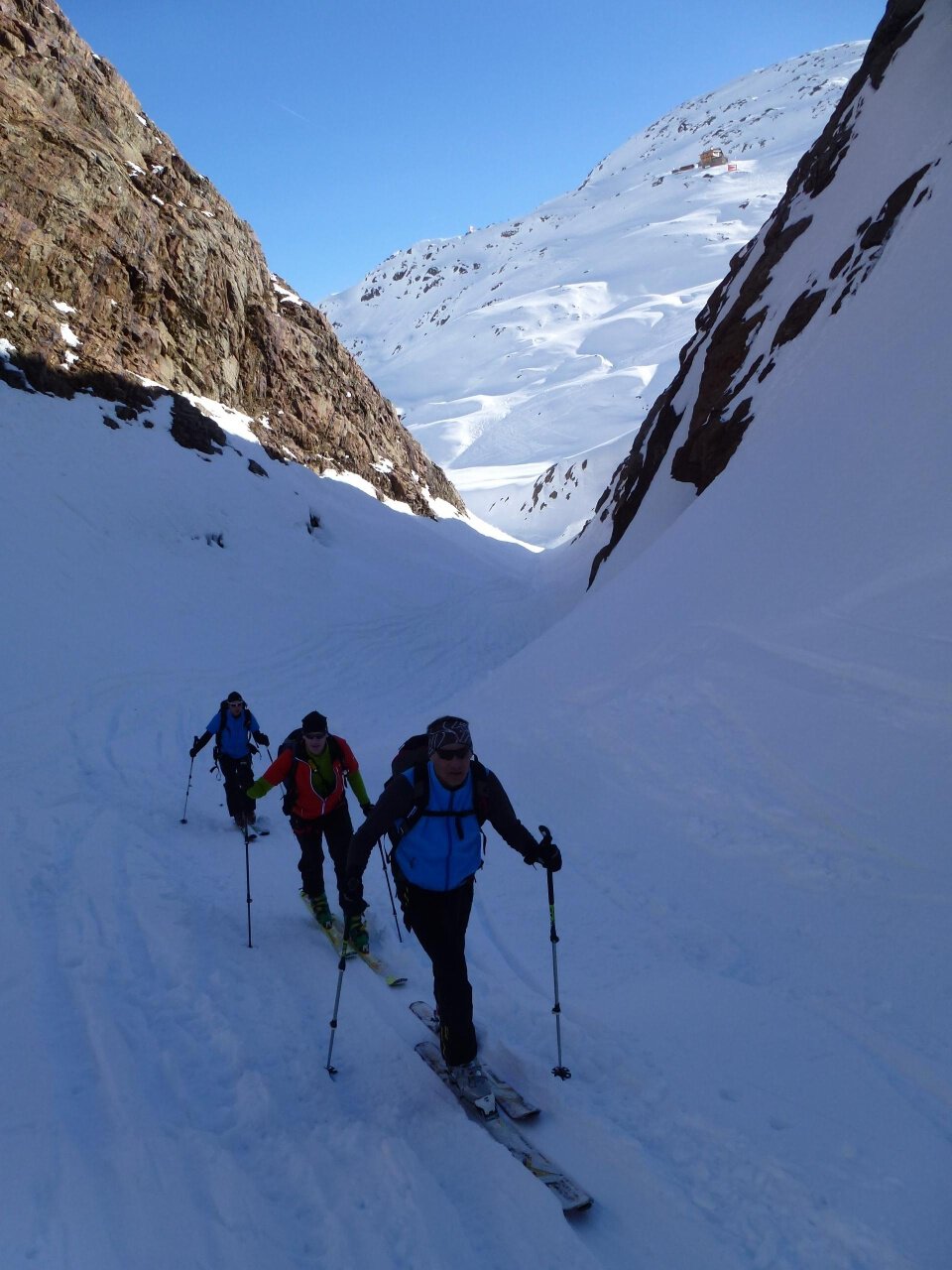
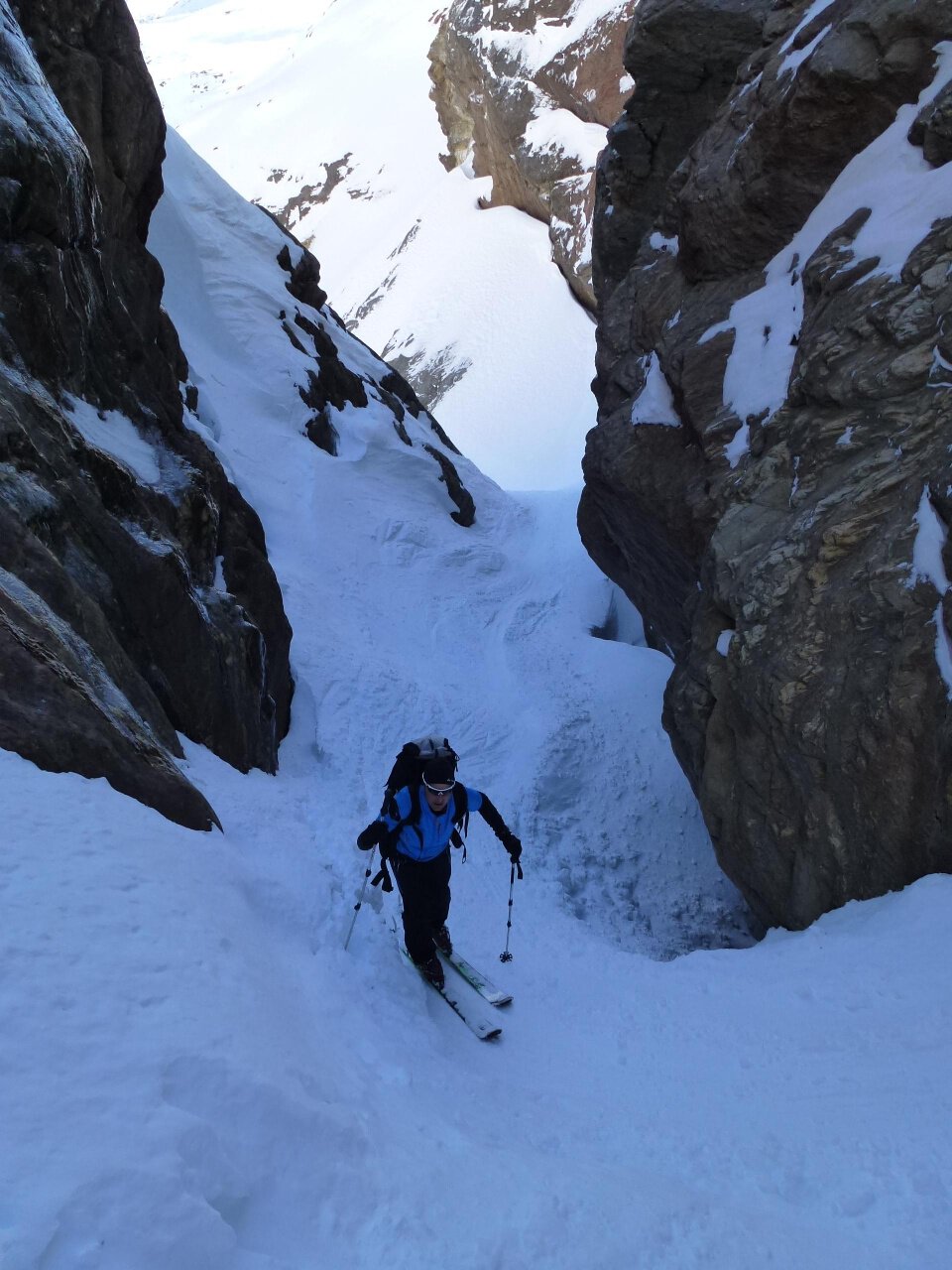
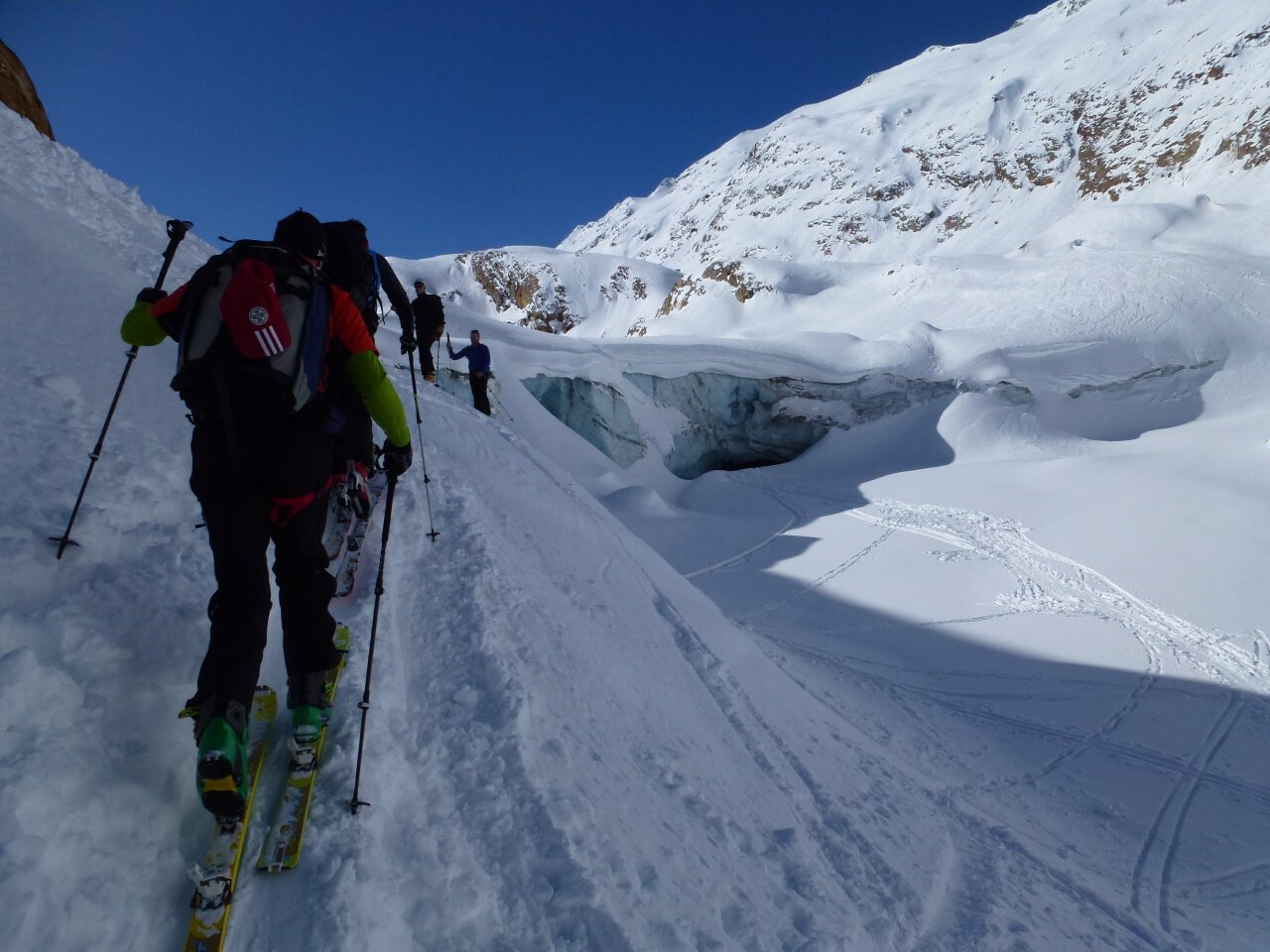
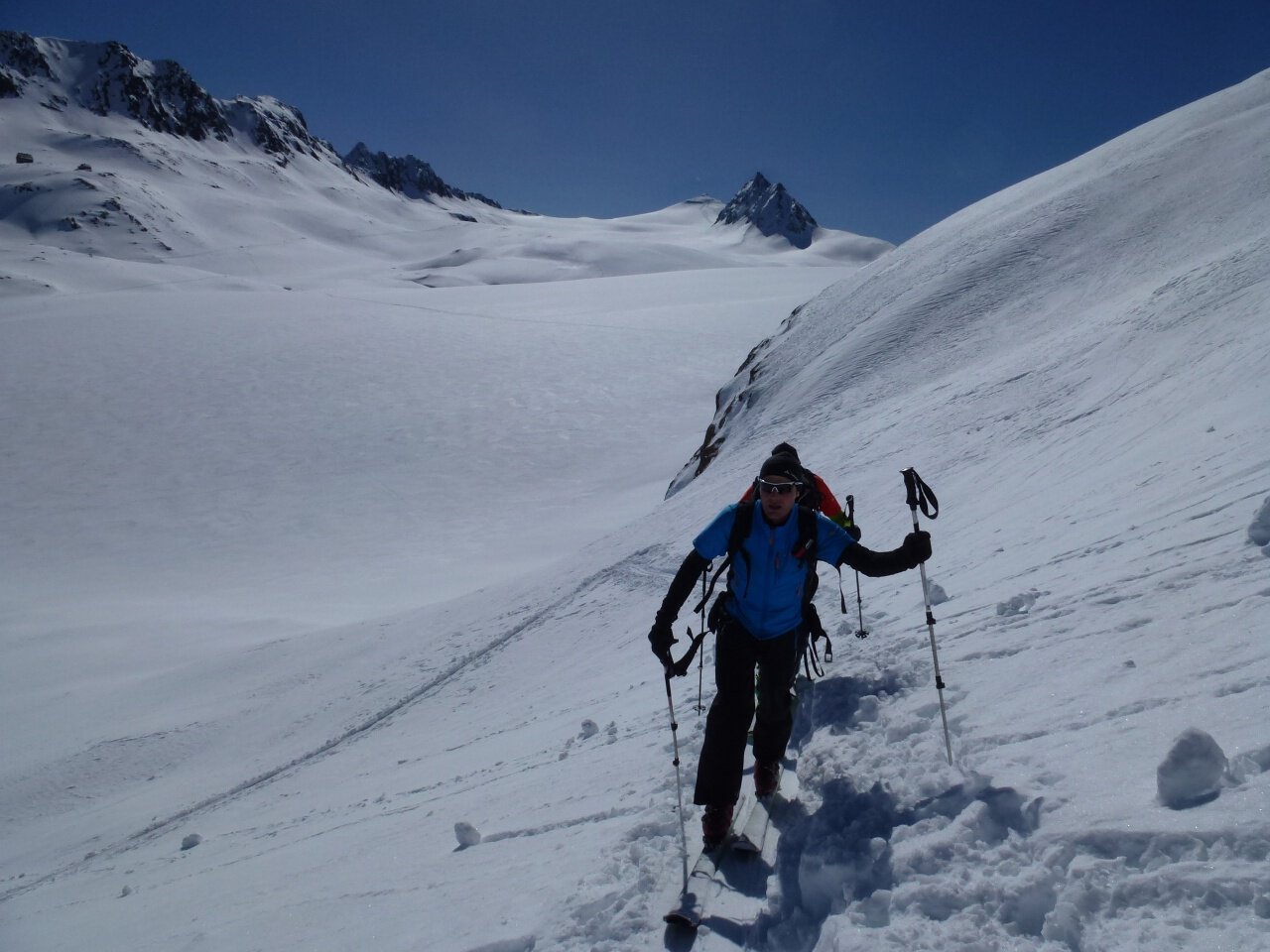
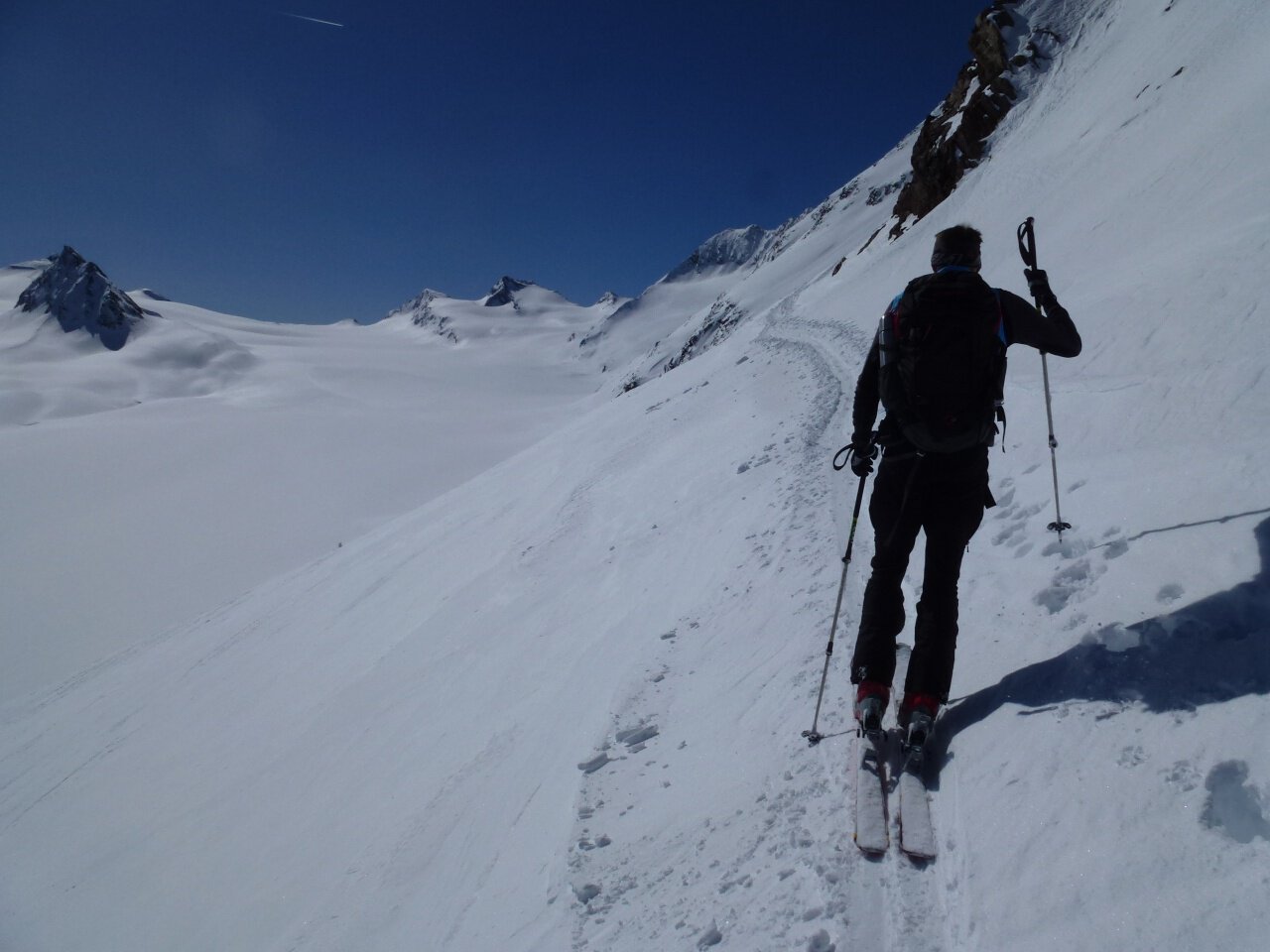
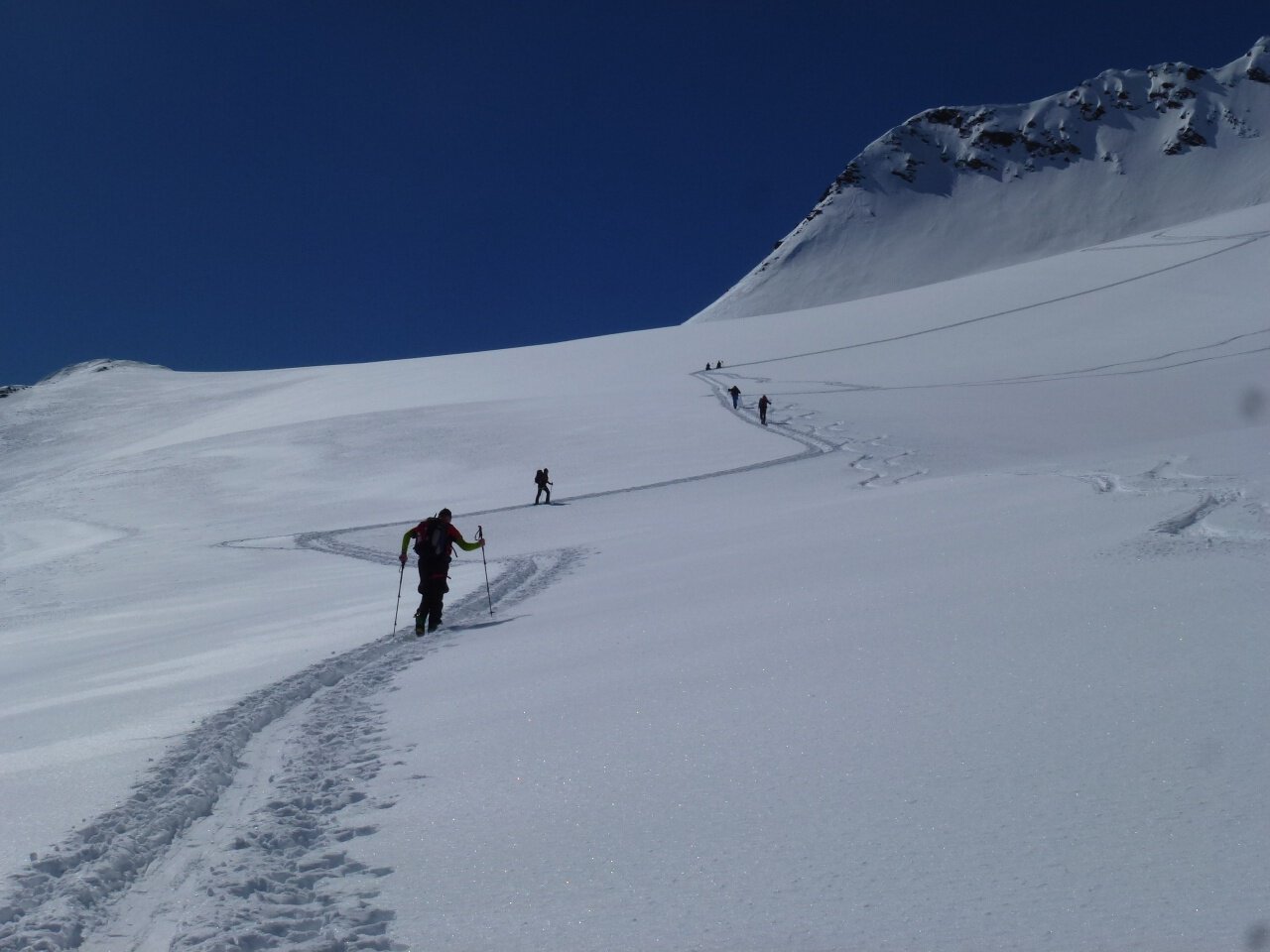
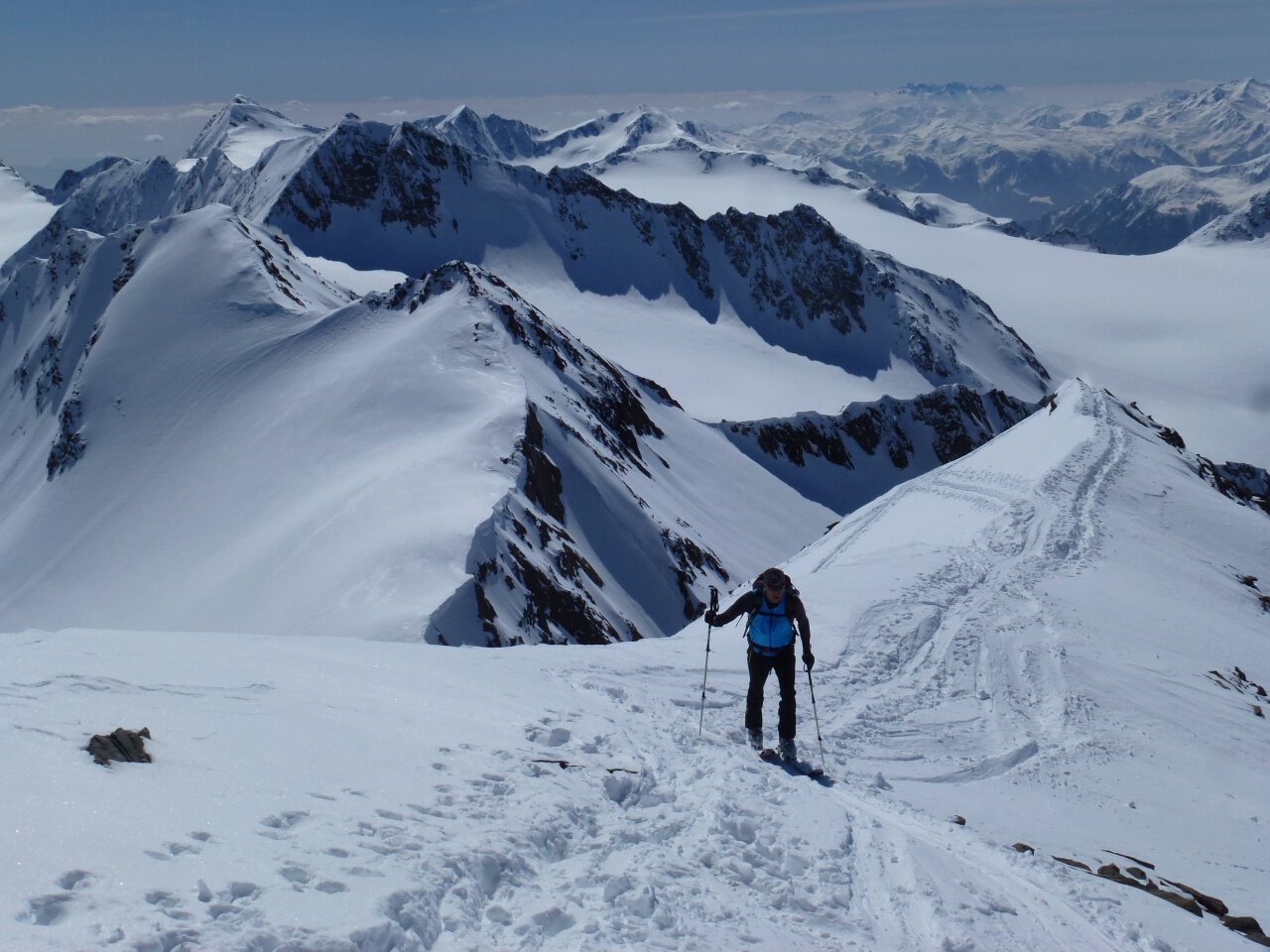
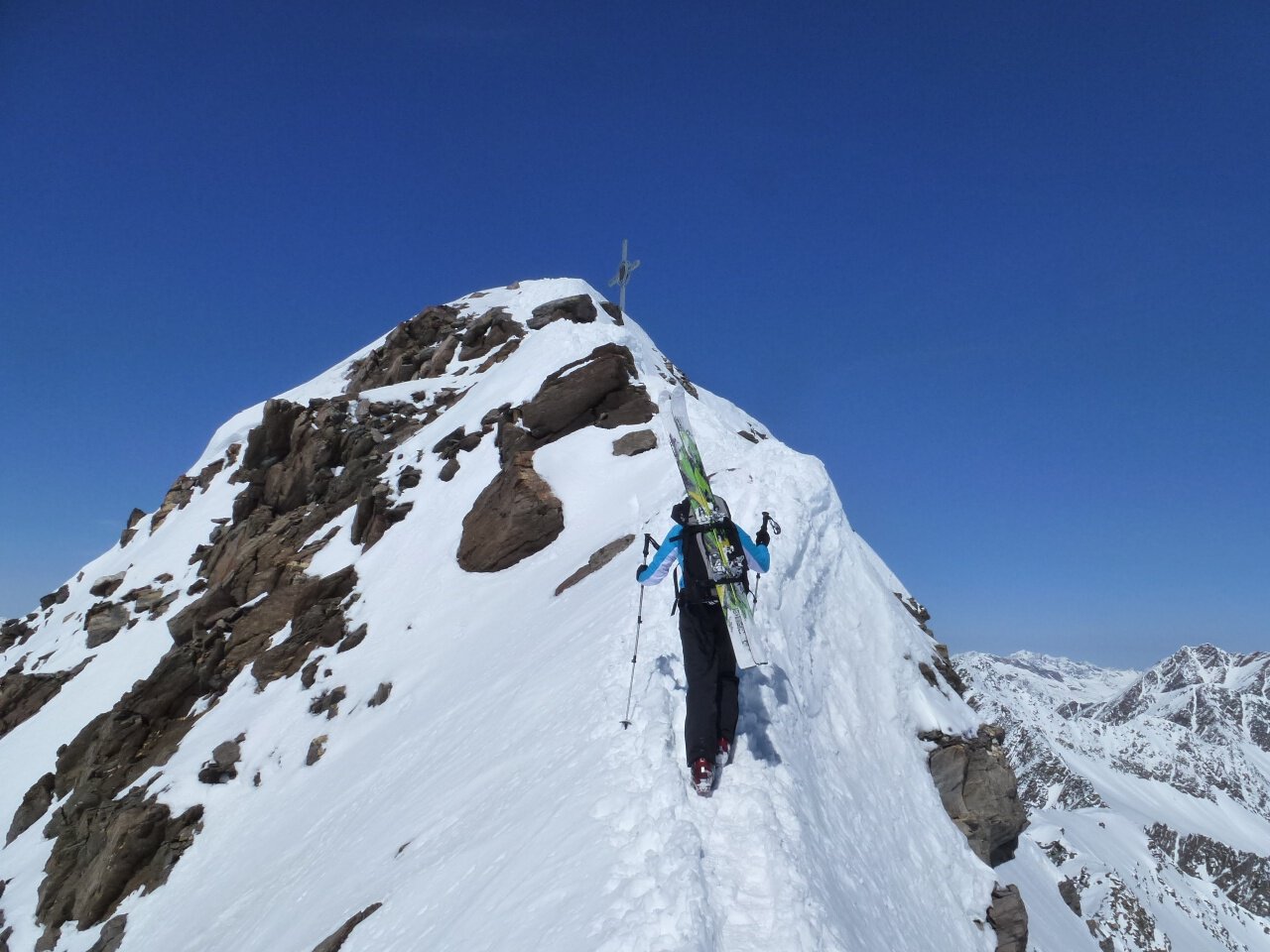
The tour initially begins with a 200 meter descent down to the Gurgler Ache. By this point, any last fatigue is gone. Next comes the first highlight, crossing the impressive gorge that leads directly to the glacier tongue of the Gurglerferner. One should not be too careless here, as there is a significant avalanche and rockfall risk from the surrounding steep slopes. This is especially important to consider during the descent, when daytime warming becomes noticeable in the later hours. The crossing onto the Gurglerferner changes year by year. Conditions can change at any time. Currently, however, the ascent onto the glacier is unproblematic and takes place on the orographically right side of the glacier. In the foreseeable future, the ice will likely retreat behind a rock island. Not affected by this is the approach to the foot of the east flank of Schalfkogel 3537m. Although the ice cover here is also steadily decreasing, the crossing on the east flank looks unproblematic for the foreseeable future. Unchanged is the fact that we are now moving in extremely avalanche-prone terrain. At the latest here, you must be sure that the avalanche conditions are absolutely safe. You now move for some time in exposed, steep terrain of 30° to 40° uphill to the Kleinleitenferner. At Kleinleitenferner itself, the glacier significantly retreats from point 3100, so that the further ascent to Schalfjoch 3375m poses no problems. From Schalfjoch 3375m, you can ascend on skis to point 3500m under favorable snow and avalanche conditions. Otherwise, from Schalfjoch 3375m you have to consistently follow the south ridge (summer path), shoulder your skis for some meters, and continue on rock. This is unavoidable in the last meters to the summit. The expected difficulties also depend greatly on snow conditions. In the best case, you reach the summit without difficulties by walking. Under unfavorable conditions, crampons and/or an ice axe can be useful. It also requires a certain amount of surefootedness and a head for heights, as light bouldering may occur. Crossing the summit is not strictly necessary to enter the Schalfferner. However, the northern ridge offers a more direct descent line from the start. The northern ridge entry has more than 40° slope and is therefore avalanche-prone. Conditions are somewhat more favorable on the south ridge ski route. The descent over the crevassed Schalfferner is one of the most spectacular ski descents that the touring area around Obergurgl has to offer. The wide and easily overseen upper part of the descent transitions into a very steep, rock-strewn, avalanche- and fall-hazardous section in the lower part. Orientation can be difficult, especially if older descent tracks are missing. Not least due to this section, this descent should only be undertaken by experienced ski mountaineers under optimal conditions. From the Gurglerferner back through the narrow gorge of the Gurgler Ache, no long stops should be planned, as rockfall and avalanche danger must not be underestimated now with the higher sun. From Gurgler Ache uphill to the Langtalereck hut 2430m, all difficulties are behind. Now you only have to activate your calf muscles one last time and master the 200 vertical meters counter-ascent.
Arrival
Public transit
Travel comfortably and safely by train to Ötztal train station. The final stop or exit point is ÖTZTAL station. Afterwards, you can travel conveniently and quickly by public local transport or local taxi companies through the entire valley to your desired destination! The current bus schedule is available at: http://fahrplan.vvt.at
Starting point
Getting there
Obergurgl-Hochgurgl is located in the west of Austria in the state of TIROL, in a southern side valley of the Inn valley - the ÖTZTAL. For your trip by car, plan the optimal travel route from your home location online with the route planner: https://www.google.at/maps
Parking
In Obergurgl-Hochgurgl the following parking options are available:
- Obergurgl village center parking lot (turn right before the church, behind the multipurpose building housing the information office) parking meter with coin insertion
- Parking lot at the town entrance – Festkoglbahn valley station, free – no overnight parking
- Hochgurglbahn valley station parking lot, free – no overnight parking
- Top Mountain Crosspoint parking lot, free
- Hochgurgl parking lot, free (very small parking lot)
Current information
cumulus clouds will form
showers later this
evening
The tour is within these protected areas.
Equipment
Recommended ski touring equipment
The "normal ski touring equipment" consists of touring skis with touring bindings, telescopic poles, climbing skins, crampons, digital avalanche transceiver, avalanche shovel, avalanche probe, first aid kit, and a mobile phone. A "complete glacier equipment" includes a harness, two prusik loops or ascenders of different lengths, two HMS carabiners, an ice axe, crampons, and a rope. A backpack with appropriate contents should be carried, including change of clothes, sun protection, cold protection, food, and enough to drink! For hut overnight stays, don't forget to bring hygiene articles and a hut sleeping bag!
DIFFICULTY RATING
- Easy: Easy, short to moderately long tours with ascents that do not exceed 25° or only briefly exceed it.
- Medium: Moderately difficult, moderately long to long tours with ascents that do not exceed 35° or only briefly exceed it.
- Difficult: Difficult, long to very long tours with ascents that reach 40° or more, and climbing sections up to grade II (UIAA).