
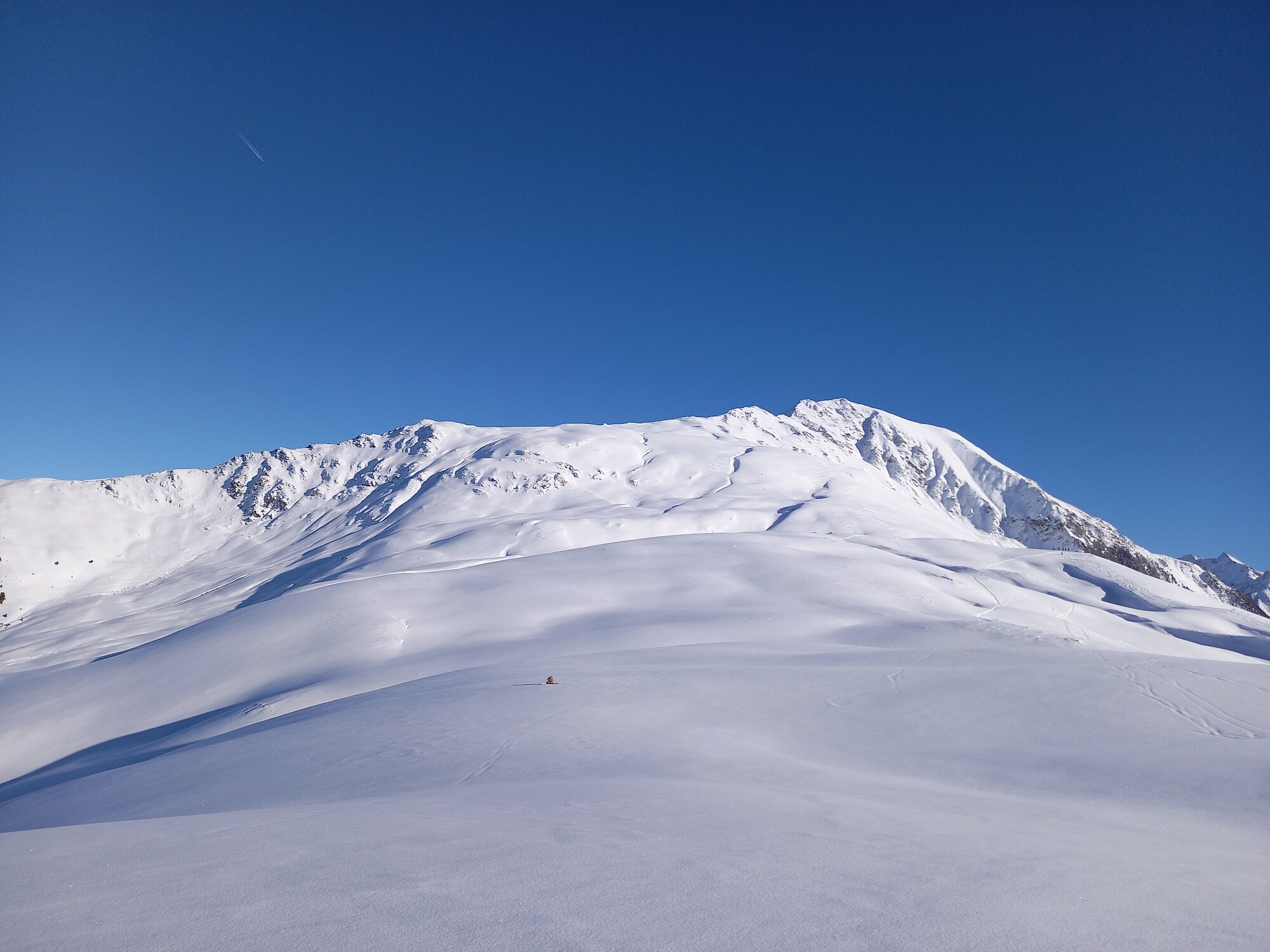

Pirchkogel (02)
Description
MARLSTEIN - fifth hairpin bend - Steinmandl - Schafjoch - north flank Pirchkogel - PIRCHKOGEL
Map & elevation profile
The Tour
MARLSTEIN - fifth hairpin bend - Steinmandl - Schafjoch - north flank Pirchkogel - PIRCHKOGEL
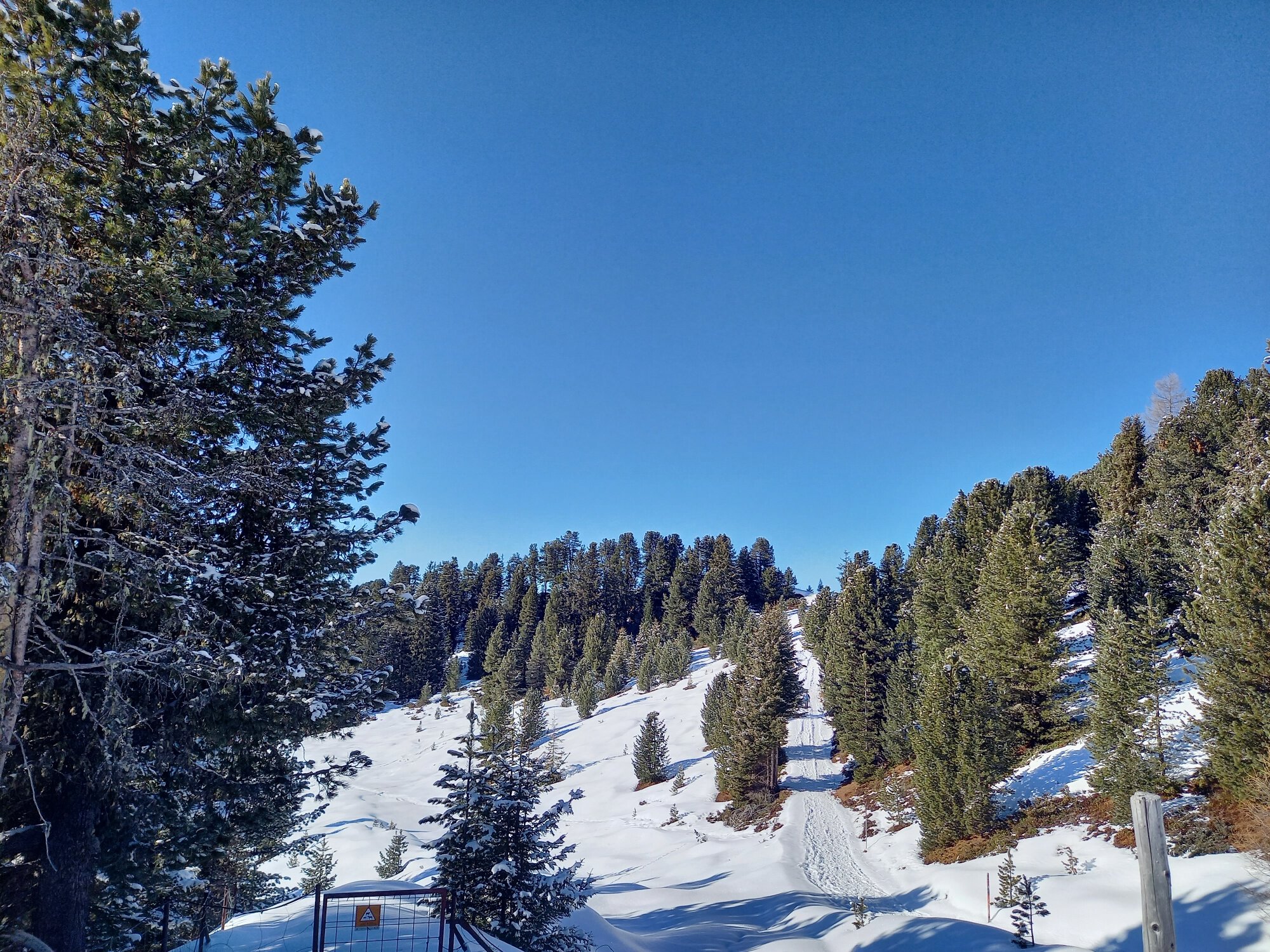
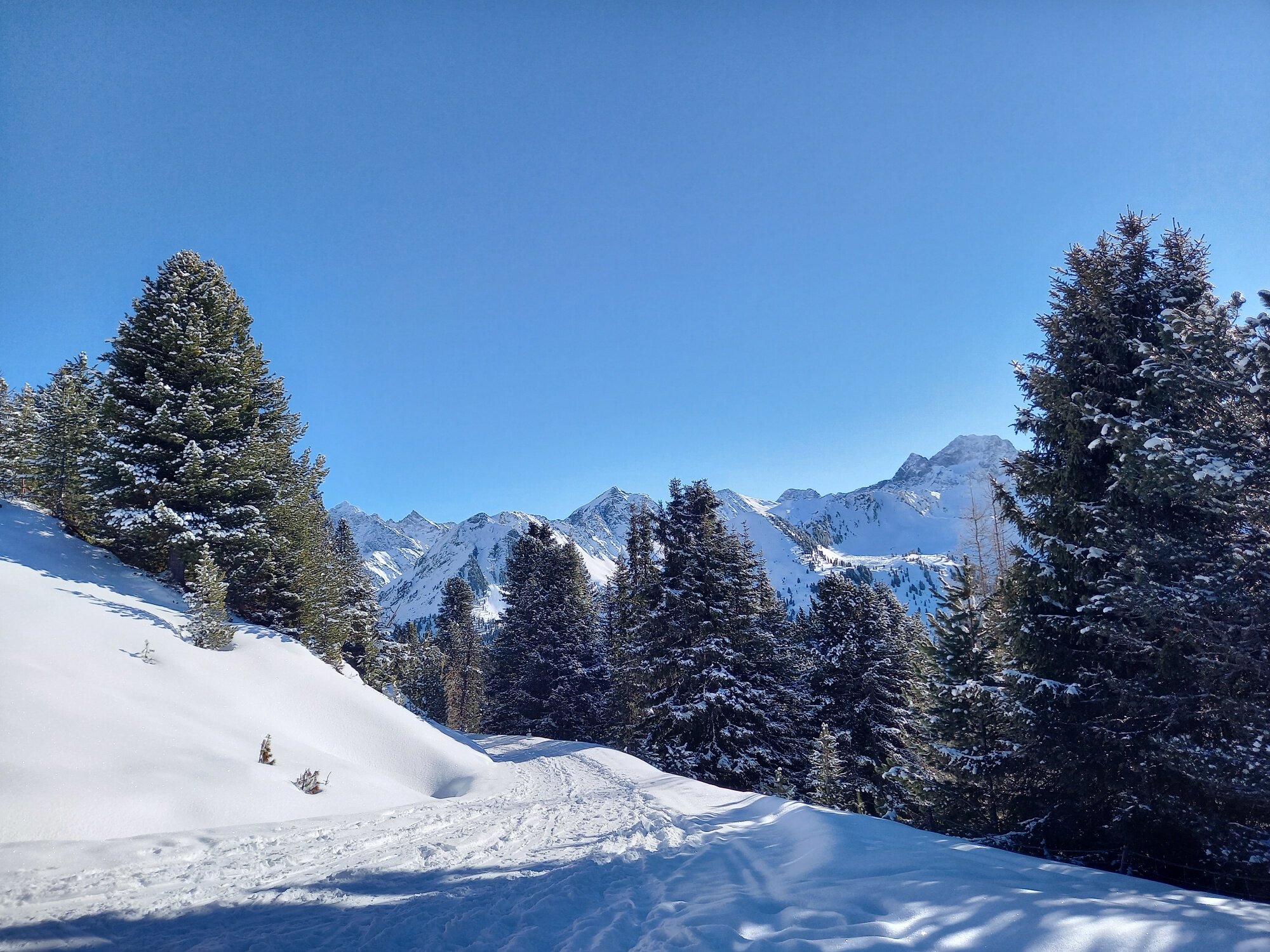
From Marlstein along the prepared winter hiking trail towards Grünwaslekreuz to the first left hairpin bend. Straight ahead east until a wide clearing is reached. Along this, on the left side about halfway uphill and then turning left through sparse forest northwards to the tree line. On a clearly distinct and undulating ridge uphill northeastwards to the main ridge. Now always eastwards, uphill over a short steep section, past a stone cairn to Schafjoch where the broad ridge narrows to a crest. Continue along the narrow crest into a saddle northwest of the summit structure and cross a short steep slope north of the summit (key point). Around the summit structure and through the upper part of the Schneetal coming from the east into the saddle between the two summit peaks. Turn left, easy ascent to the highest point without summit mark and then briefly back to the summit cross on the second summit peak.
Regions & Places
Mountain areas
Details
Characteristics
Way types
Exposition
Safety guidelines
Avalanche Danger Scale
1 (LOW)
An avalanche release is only possible with heavy additional load on very few, extreme steep slopes. Spontaneous avalanches (so-called sluffs) are not expected. Generally safe conditions.
2 (MODERATE)
An avalanche release is likely with heavy additional load mainly on the specified steep slopes. Larger avalanches are not expected. The snow cover is generally well consolidated except on some steep slopes. Careful route choice on the specified steep slopes and slope exposures.
3 (CONSIDERABLE)
An avalanche release is likely even with light additional load mainly on the specified steep slopes. Occasionally some medium and sporadically large avalanches are possible spontaneously. The snow cover is only moderately to weakly consolidated on many steep slopes. Experience in avalanche assessment is necessary. Avoid specified steep slopes and slope exposures as much as possible.
4 (HIGH)
An avalanche release is possible even with light additional load mainly on the specified steep slopes. Many medium, and repeatedly also large avalanches can occur occasionally. On many steep slopes the snow cover is only weakly consolidated. Route choice should be restricted to moderately steep terrain and avalanche runout zones should be observed. Much experience in avalanche assessment is necessary.
5 (VERY HIGH)
Numerous large avalanches, including in moderately steep terrain, are expected spontaneously. At this warning level, safe operation in ski areas is no longer possible. The snow cover is generally weakly consolidated and unstable. Avoid tours is recommended.
See also at lawine.tirol.gv.at
Additional information
Ski Touring Rules
- Observe applicable regulations for all activities in nature and route selection (e.g., wildlife protection areas, hunting closure areas, reforestation areas, information boards, etc.)
- Respect quiet zones for wildlife and avoid feeding areas as well as loud noise
- Cross forested areas in winter preferably only on approved paths and routes, animals react very panicky to unlocalized noise.
- Recognize the habitats of wildlife, avoid animals when possible. Observe wildlife only from a distance. Dogs must be kept on a leash; it is absolutely irresponsible to let dogs roam freely in the forest during the winter emergency period.
- Proper time planning: Start early enough and return before nightfall. In spring, you should be back at the hut by noon (avalanche risk)
- Never ski through reforestation and young growth areas.
Ötztal Tourism assumes no liability for the listed tours and recommends taking a mountain guide. Glacier crossings are only possible with a rope and in a group.
Before starting a tour, inform the valley of your destination and expected return time. Carrying an avalanche transceiver is strongly recommended.
More information about ski touring in the Ötztal: https://www.oetztal.com/skitouren
Directions
From Marlstein along the prepared winter hiking trail towards Grünwaslekreuz to the first left hairpin bend. Straight ahead east until a wide clearing is reached. Along this, on the left side about halfway uphill and then turning left through sparse forest northwards to the tree line. On a clearly distinct and undulating ridge uphill northeastwards to the main ridge. Now always eastwards, uphill over a short steep section, past a stone cairn to Schafjoch where the broad ridge narrows to a crest. Continue along the narrow crest into a saddle northwest of the summit structure and cross a short steep slope north of the summit (key point). Around the summit structure and through the upper part of the Schneetal coming from the east into the saddle between the two summit peaks. Turn left, easy ascent to the highest point without summit mark and then briefly back to the summit cross on the second summit peak.
Arrival
Public transit
Travel comfortably and safely by train to the Ötztal train station. The final stop or exit point is ÖTZTAL station. Afterwards, travel conveniently and quickly with public transport or local taxi companies through the entire valley to your desired destination! The current bus timetable is available at: http://fahrplan.vvt.at
Starting point
Getting there
Ochsengarten is located in western Austria in the federal state of TIROL, in a southern side valley of the Inn valley – the ÖTZTAL. For your arrival by car, plan the optimal travel route from your home location online with the route planner here: https://www.google.at/maps
Parking
Parking lot at the Berghotel Marlstein
Current information
Frost line at 3,700 metres
Lots of cloud, but hardly any showers
Equipment
Recommended Ski Touring Equipment
The "normal ski touring equipment" consists of touring skis with touring bindings, telescopic poles, climbing skins, crampons, digital avalanche transceiver, avalanche shovel, avalanche probe, first aid kit, and a mobile phone. A "complete glacier equipment" consists of a harness, two prusik loops or ascenders of different lengths, two HMS carabiners, ice axe, crampons, and a rope. A backpack with appropriate contents should be carried, including spare clothing, sun protection, cold protection, provisions, and enough to drink! Do not forget to take hygiene articles and a hut sleeping bag for overnight stays in huts!
DIFFICULTY RATING
- Easy: Easy, short to moderately long tours with ascents that do not exceed 25° or only briefly exceed it.
- Medium: Medium difficulty, moderately long to long tours with ascents that do not exceed 35° or only briefly exceed it.
- Hard: Difficult, long to very long tours with ascents reaching 40° or more, and climbing sections up to grade II difficulty (UIAA).